Vegitarians How Did You Feel Eating Meat Again Reddit
How a vegan nutrition could touch your intelligence
(Image credit:
Getty Images
)
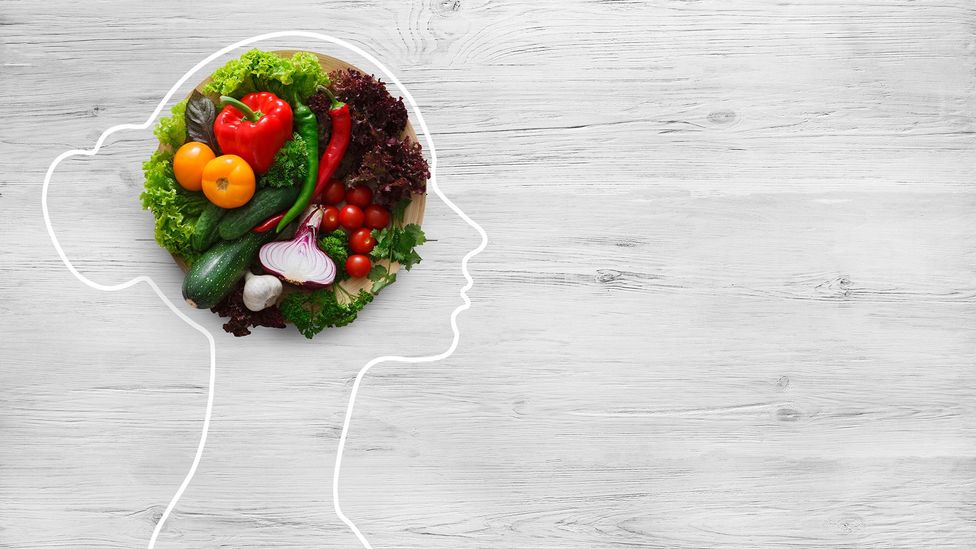
The vegan diet is low in – or, in some cases, entirely devoid of – several of import brain nutrients. Could these shortcomings be affecting vegans' abilities to think?

It was the late 1880s in the city of Rajkot, India. The meeting was to accept identify on the banks of the local river – and discretion was essential. Mahatma Gandhi, who was just a teenager at the time, hadn't told his parents where he was going; if they had found out, they would have been shocked to decease.
As it happens, Gandhi was having a picnic. And on this occasion, India'due south future national hero – and one of the almost famous vegetarians in history – wasn't planning to dine on cucumber sandwiches. No, for the offset time in his life, he was going to eat meat.
As he after wrote in his biography, Gandhi was raised every bit a strict Vaishnava Hindu, and then he had never even seen meat before this fateful day. But his picnic companion was a shady character with an unusual obsession – the thought that meat held the key to being physically and mentally strong.
In the end, Gandhi braved the meat. It was equally tough as leather.
More than stories on The Vegan Factor from BBC Adept Food
- Is going vegan ameliorate for the planet?
- Vegan takeaway recipes
The idea that fugitive meat is bad for our brains makes some intuitive sense; anthropologists take been arguing about what our ancestors ate for decades, but many scientists think that there was a lot of bone-crunching and encephalon-slurping on the road to evolving these remarkable ane.4kg (3lb) organs. Some have even gone so far as to say that meat made us human.
One reason is that intelligence is expensive – the brain devours nigh 20% of our daily calories, though it accounts for just 2% of our body weight – and what better way to find the enormous array of fats, amino acids, vitamins and minerals these fastidious organs require, than past feasting on animals which accept already painstakingly collected or made them.

Mahatma Gandhi, India'due south pioneering independence leader, even toyed with eating meat despite his vegetarian beliefs (Credit: Getty Images)
But though it's difficult to imagine our ancestors choosing turnips over tuna, today information technology's a unlike story. According to the latest statistics, there are around 375 one thousand thousand vegetarians on the planet. In the West, veganism has ditched the hippie stigma to become one of the fastest-growing millennial trends; in the United states of america, it grew by 600% between 2014 and 2017. Meanwhile in India, meat-free diets have been mainstream since the sixth Century BCE.
On the one hand, recent concern almost the nutritional gaps in plant-based diets has led to a number of alarming headlines, including a warning that they can stunt brain development and cause irreversible impairment to a person's nervous system. Back in 2016, the German Society for Nutrition went so far as to categorically land that – for children, pregnant or nursing women, and adolescents – vegan diets are not recommended, which has been backed up past a 2018 review of the research. Subsequently the Royal Academy of Medicine in Belgium decided a vegan diet was "unsuitable" for children, parents who force a vegan nutrition on their offspring in Belgium could even one day find themselves in prison.
But on the other, if abstaining from meat had any real impact on our brains, you would think that nosotros would already accept noticed. So is it really dissentious our intellects, or is this all merely fright of the unknown?
Ideally, to exam the affect of the vegan diet on the brain, y'all would take a randomly selected group of people, ask half to stop eating animal products – then come across what happens. But there isn't a unmarried study like this.
Instead, the just research that comes close involved the reverse. It was conducted on 555 Kenyan schoolchildren, who were fed 1 of three unlike types of soup – one with meat, one with milk, and one with oil – or no soup at all, as a snack over seven school terms. They were tested before and after, to see how their intelligence compared. Because of their economic circumstances, the majority of the children were de facto vegetarians at the start of the study.
Surprisingly, the children who were given the soup containing meat each day seemed to have a significant edge. By the end of the study, they outperformed all the other children on a examination for non-verbal reasoning. Forth with the children who received soup with added oil, they also did the all-time on a test of arithmetics ability. Of course, more research is needed to verify if this consequence is real, and if information technology would also apply to adults in developed countries, too. Just it does raise intriguing questions about whether veganism could be holding some people back.
In fact, at that place are several important brain nutrients that simply practice not be in plants or fungi. Creatine, carnosine, taurine, EPA and DHA omega-3 (the third kind tin exist plant in plants), haem iron and vitamins B12 and D3 generally merely occur naturally in foods derived from animal products, though they can exist synthesised in the lab or extracted from non-animal sources such every bit algae, bacteria or lichen, and added to supplements.
Others are found in vegan foods, simply only in meagre amounts; to get the minimum amount of vitamin B6 required each twenty-four hour period (1.3 mg) from one of the richest plant sources, potatoes, you'd have to eat near 5 cups' worth (equivalent to roughly 750g or 1.6lb). Succulent, but not particularly practical.
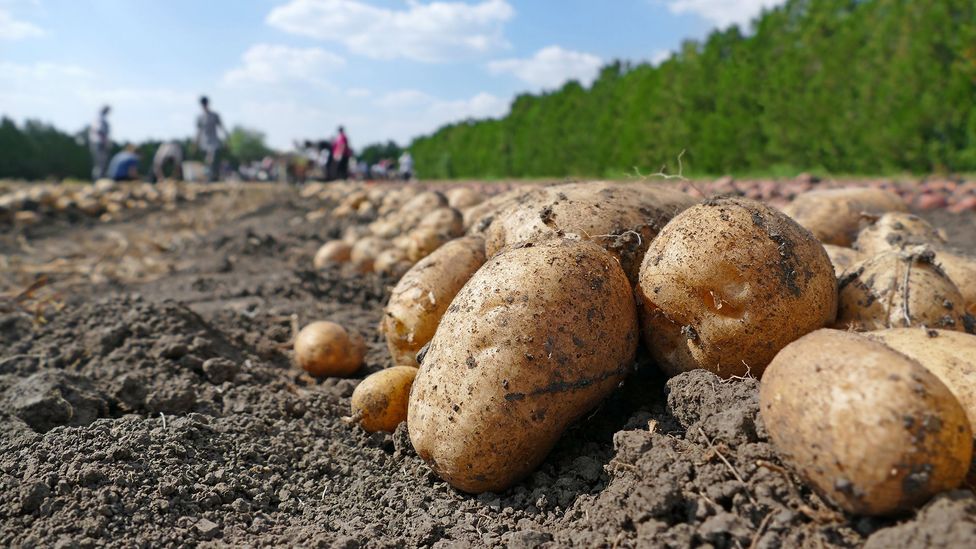
To get your daily requirement of vitamin b6, you lot would need to swallow effectually 1.5lbs of potatoes (Credit: Getty Images)
And though the trunk can make some of these vital brain compounds from other ingredients in our diets, this ability isn't usually enough to make up for these dietary cracks. For all of the nutrients listed above, vegetarians and vegans have been shown to have lower quantities in their bodies. In some cases, deficiency isn't the exception – it's completely normal.
For now, the touch these shortcomings are having on the lives of vegans is largely a mystery. But a trickle of recent studies have provided some clues – and they make for unsettling reading.
"I call up at that place are some real repercussions to the fact that plant-based diets are taking off," says Taylor Wallace, a nutrient scientist and CEO of the nutrition consulting firm Think Healthy Group. "It's not that constitute-based is inherently bad, but I don't think we're educating people enough on, you know, the nutrients that are by and large derived from animal products."
1 of the about well-known challenges for vegans is getting enough vitamin B12, which is just constitute in animal products like eggs and meat. Other species larn it from bacteria which live in their digestive tracts or faeces; they either absorb it direct or ingest it by snacking on their own poo, but unfortunately (or fortunately, depending on how you look at it) humans can't do either.
"At that place are some tragic cases of children whose brains failed to develop because of their parents existence ill-informed vegans," says David Benton, who studies the link between our diets and brain chemistry at Swansea University. In one example, the child was unable to sit or grinning. In another, they slipped into a blackout.
Later in life, the amount of B12 in a person'southward blood has been directly correlated with their IQ. In the elderly, one study found that the brains of those with lower B12 were half-dozen times more likely to exist shrinking.
Still, low B12 is widespread in vegans. One British study institute that half of the vegans in their sample were deficient. In some parts of India, the trouble is owned – perhaps as a consequence of the popularity of meat-free diets.
Another nutrient that's scarce in the typical vegan diet is iron. Though we oft associate it with blood, iron besides plays prominent role in brain evolution, and is essential for keeping the organ healthy throughout our lives. For example, one 2007 study found that giving immature women atomic number 26 supplements led to significant intellectual gains. In those whose blood iron levels increased over the course of the report, their performance on a cognitive test improved betwixt five- and seven-fold, while participants whose haemoglobin levels went up experienced gains in their processing speed.
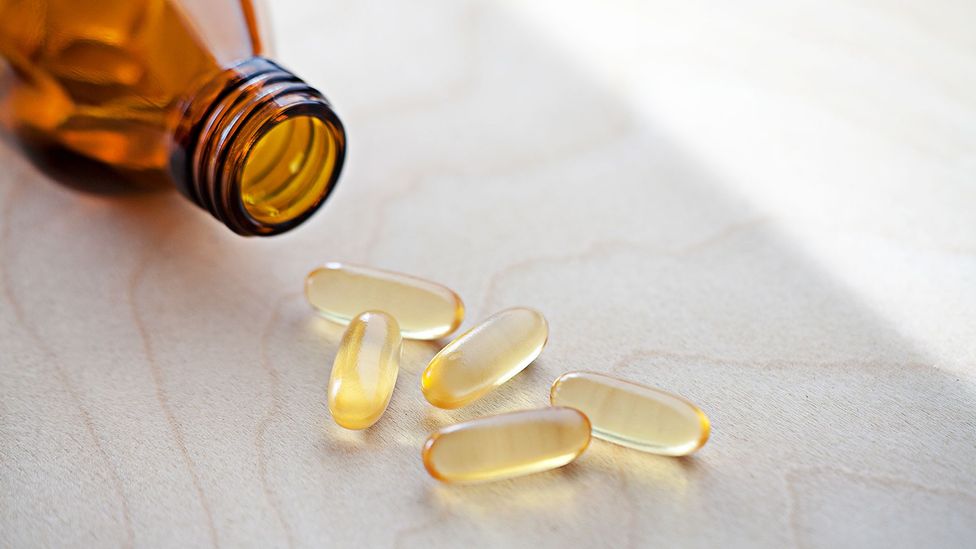
It is important for vegans to have supplements to supersede the essential elements plant in animate being products, experts say (Credit: Getty Images)
It's surprisingly like shooting fish in a barrel to sideslip into iron deficiency, even though it makes up eighty% of the inner mass of the planet we live on. Up to two billion people are thought to have a shortage of the element worldwide, making it the most common nutritional inadequacy. Vegans are peculiarly decumbent, considering the form that's most readily absorbed by the body is "haem iron", which is only found in animal proteins. I German study establish that 40% of the vegans they looked at were consuming less than the recommended daily amount.
Other common deficiencies amidst vegans include D3, omega-3, selenium, folate and iodine. Though the trunk can make D3 when the skin is exposed to sunshine, this doesn't brand upwards for the extra that vegans are missing from their diets. In the winter months, when the sun is weaker, omnivores living in the Uk have virtually 40% more vitamin D3 in their blood than vegans.
Of course, some of these things can hands exist acquired from supplements. But others are so obscure, vegans are unlikely to have fifty-fifty heard of them – let lone realise they could be missing out.
I example is taurine. This enigmatic amino acrid is one of the most plentiful in the human brain, where information technology's thought to underpin several important processes, such every bit regulating the number of neurons. Information technology'south oft added to caffeinated energy drinks, because of the (possibly mistaken) conventionalities that it tin can provide an immediate cognitive boost.
Though there are pocket-size amounts of taurine in some dairy products, the primary dietary sources are meat and seafood. "Some species have the power to make all the taurine they need," says Jang-Yen Wu, a biomedical scientist at Florida Atlantic University. "But humans take a very limited capacity to do this."
For this reason, vegans tend to have less taurine in their bodies. No one has looked into how this might be affecting their cerebral abilities all the same, just based on what we know about its role in the brain, Wu says vegans should be taking taurine tablets. "People can become deficient when they restrict their diets, considering vegetables have no taurine content," he says.
In fact, the holes in our electric current agreement of what the brain needs to exist healthy could potentially exist a major problem for vegans, since information technology's hard to artificially add a nutrient to your diet, if scientists haven't discovered its worth nevertheless.
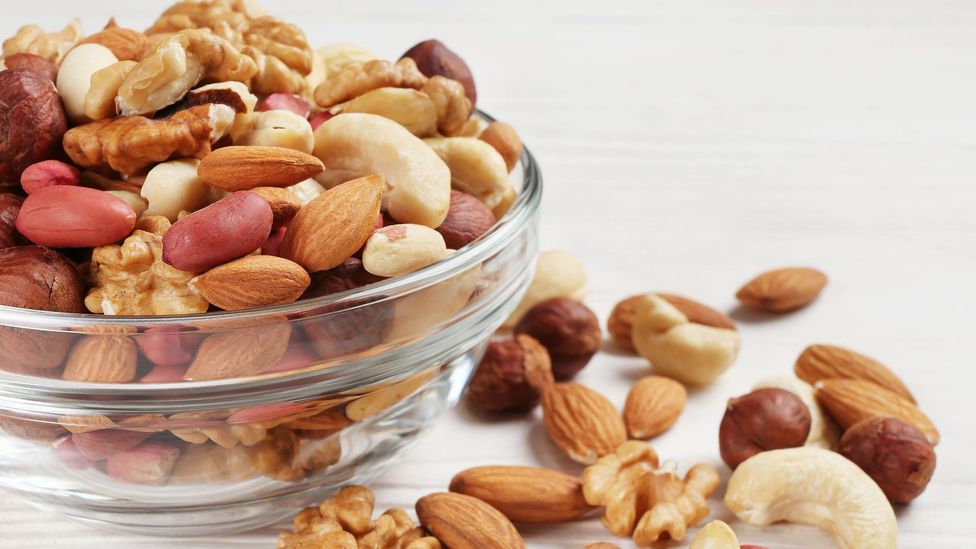
Information technology's hard to artificially add a food to your diet, if scientists oasis't discovered its worth yet (Credit: Getty Images)
"There are so many unknowns," says Nathan Cofnas, who has authored a review on the subject. "And when you deviate from the typical nutrition for your species, to one which has not been tested and properly established to be good for you or expert for the brain, y'all are conducting an experiment and you lot are taking a risk."
Have choline: in the brain, it's used to brand acetylcholine, which is involved in a number of tasks, including relaying messages between nerve cells. It's key to our ability to think – even insects have information technology in their tiny brains – and the torso can't produce plenty of it on its own.
And yet: "It's a very understudied nutrient," says Wallace. "I believe nosotros've simply considered it essential [something you take to go from your diet] since the tardily 1990s."
There are small amounts of choline in lots of vegan staples, but among the richest sources are eggs, beefiness and seafood. In fact, even with a normal diet, ninety% of Americans don't consume enough. According to unpublished inquiry past Wallace, vegetarians accept the lowest intakes of whatsoever demographic. "They accept extremely low levels of choline, to the point where it might be concerning," he says.
For vegans, the moving-picture show is likely to be bleaker still, since people who eat eggs tend to have most double the choline levels of those who don't. And though the US government have set suggested intakes, they might be way off.
Wallace points to a 2018 study, which found that the babies of women who consumed twice the amount considered "acceptable" – around 930mg each day – in the last third of pregnancy enjoyed a lasting cognitive edge. For comparison, the boilerplate vegetarian gets roughly a fifth of that amount.
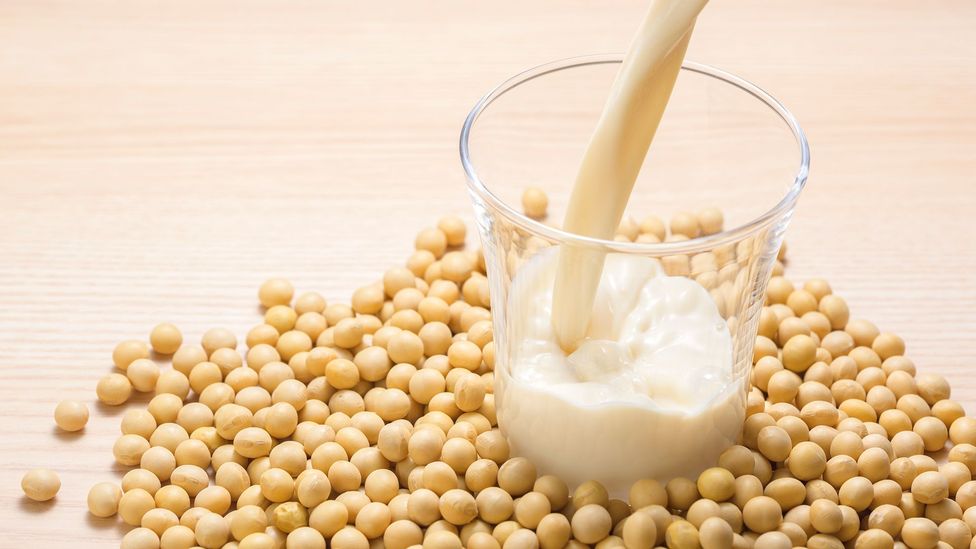
Vegans can get the protein they need from alternatives such as soya, but it won't give them essential elements such every bit choline and creatine (Credit: Getty Images)
In other cases, our understanding is even murkier.
The latest food in question is creatine – a white, powdery substance often establish in fettle shakes. Its natural function in the torso is to supply our cells with energy, so information technology'due south revered by gym obsessives as a manner to meliorate their endurance.
Merely it's besides important to the brain – and studies have shown that increasing your intake can provide a range of benefits, such as a ameliorate recognition memory and reduced mental fatigue. Recently it's started to gain traction as a smart drug.
Information technology'due south well-established that vegans and vegetarians have significantly lower levels in their bodies, because plants and fungi don't contain any.
This has led scientists to wonder whether a creatine deficit could exist belongings some people dorsum. For one written report, researchers tested how the intelligence of vegetarians and omnivores changed after v days on supplements. "Nosotros found that the vegetarians seemed to benefit particularly," says David Benton from Swansea Academy, who led the research.
In contrast, the omnivores were relatively unaffected. This hints that, unlike the vegetarians, they already had the appropriate corporeality of creatine in their brains.
Withal, Caroline Rae, who led another study, says there isn't plenty show to dorsum taking creatine yet. It may come up with unintended consequences, such every bit reducing the brain'south ability to brand its own – leading to "creatine withdrawal". "I've ever hypothesised that information technology could be useful if you lot wanted to cram for an exam, simply it would be interesting to come across if people then got slower after they stopped."
Finally, the brain largely makes its own supply, then information technology's non clear if vegans actually need any extra. Instead of beingness a major source, the creatine in our diets might only be used by the encephalon in "extreme" conditions, like when we're stressed.
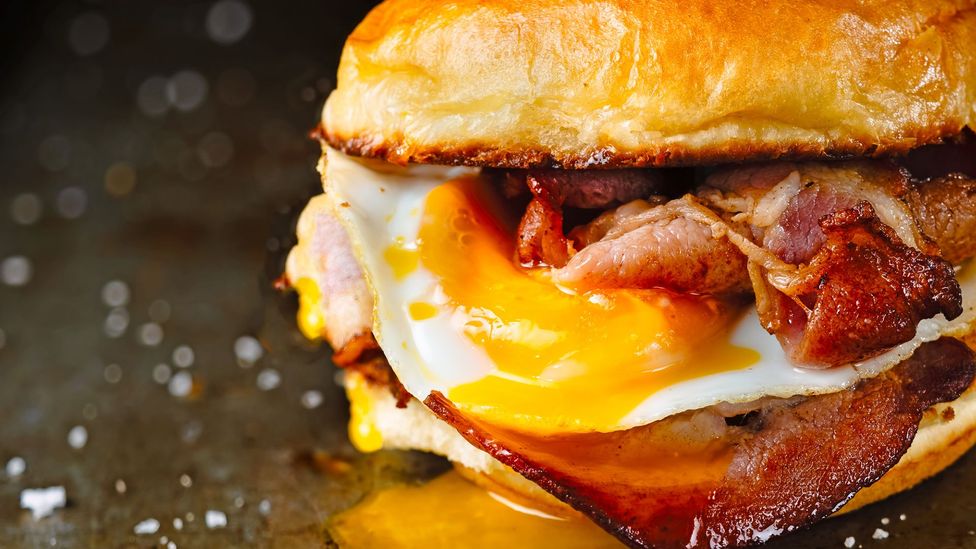
Creatine, carnosine, taurine, omega-3, heme atomic number 26 and vitamins B12 and D3 but occur naturally in foods fabricated from beast products (Credit: Getty Images)
Nevertheless, Cofnas finds the potential creatine deficits in vegans agonizing. "Information technology can make quite a substantial difference in your life, whether your intelligence is 1 standard divergence above the mean or two," he says, referring to the small-yet-significant intellectual gains fabricated by vegetarians on creatine supplements.
So what's the verdict?
"I call back we need a lot more than research into vegan nutrition and health," says Heather Russell, a dietitian from The Vegan Club. "As far as nosotros tin tell, it's possible to lead a healthy life every bit a vegan – certainly there are people who thrive on a vegan diet." Though it'southward important to accept supplements, she explains that a person's cardiovascular and brain wellness are inextricably linked, and vegans tend to have healthier hearts.
"I tell people all the time, if you're going to be a vegan or vegetarian, that'south fine," says Wallace. "I'one thousand certainly not advocating confronting it. But there are 40 or something essential nutrients. Then, I mean, it actually would take a lot of research for vegans to get everything the encephalon needs," he says. Some nutrients that a typical vegan diet is low or defective in, like choline, creatine, carnosine and taurine, are extremely bulky, so just taking a standard vitamin tablet won't be enough. Instead, they need to be taken individually.
Benton agrees. "I'm sure that if you are knowledgeable, conscientious, and obsessive almost information technology – and yous have all the right personality characteristics to exist this fashion – then it is possible to accept a healthy nutrition as a vegan," he says. "Merely it is distinctly possible that you could have deficiencies."
Cofnas takes a harsher view. Though vegans tin take supplements, he thinks it'south unrealistic to expect that they all volition. Consequently, he finds the recent shift towards found-based diets troubling, though he's sympathetic to the arguments for doing so. "Without question, veganism can cause B12 and fe deficiencies, and without question they affect your intelligence," he says.
As for Gandhi, he somewhen abased his illicit relationship with meat, and went dorsum to vegetarianism. But his experiments with nutrition didn't end in that location. He also ditched table salt, then went dorsum to information technology, and attempted veganism – though afterward a bout of dysentery practically reduced him to a living skeleton, he decided that milk products were necessary, in social club for a person to be healthy.
Whatever the truth is, isn't information technology about time we found out?
An earlier version of this article stated omega-3 generally just occurs in animal products. The article has been corrected to make clear in that location are iii types of omega-3 fatty acids and that one of these, ALA, is institute mainly in plants.
The article too stated that Nathan Cofnas was a biologist at the University of Oxford. He is in fact studying philosophy of biology at the University of Oxford and has co-authored studies looking at the impact of the vegan nutrition on health and the brain. The article has been corrected to reflect that.
--
Join i million Time to come fans by liking us on Facebook , or follow us on Twitter or Instagram .
If you liked this story, sign up for the weekly bbc.com features newsletter , called "The Essential List". A handpicked option of stories from BBC Time to come, Culture, Worklife, and Travel, delivered to your inbox every Friday.
Source: https://www.bbc.com/future/article/20200127-how-a-vegan-diet-could-affect-your-intelligence
0 Response to "Vegitarians How Did You Feel Eating Meat Again Reddit"
Post a Comment